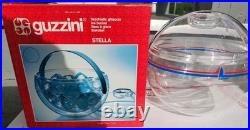
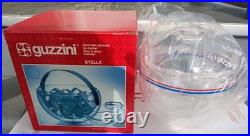
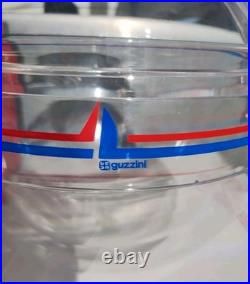
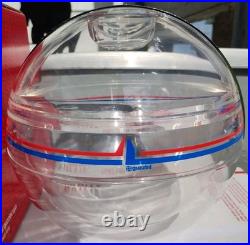
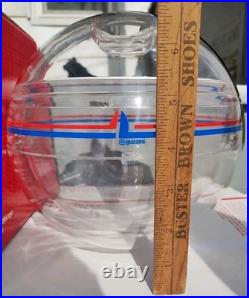
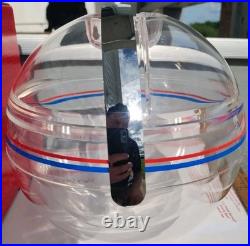
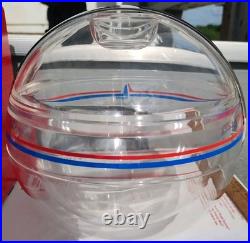
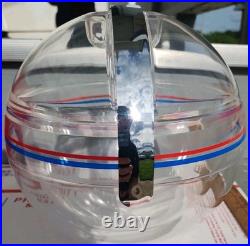
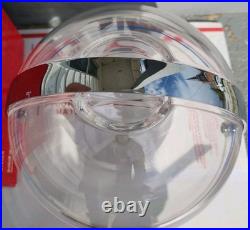
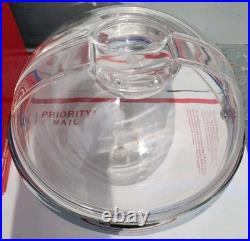


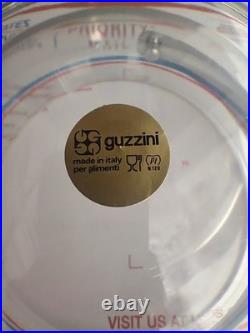
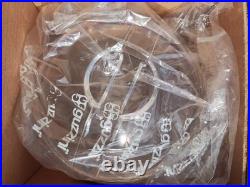
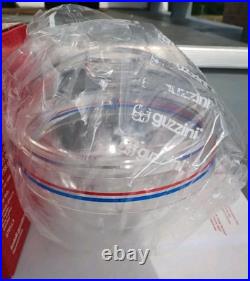
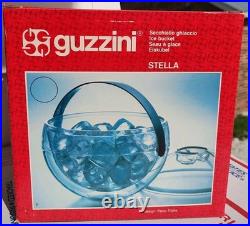
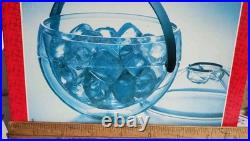
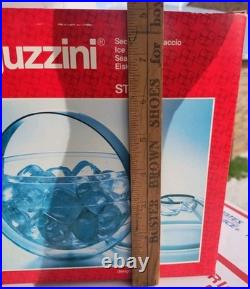
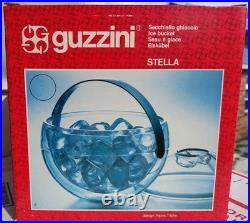


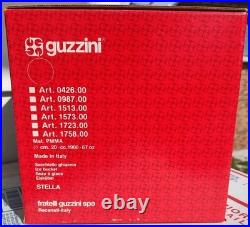
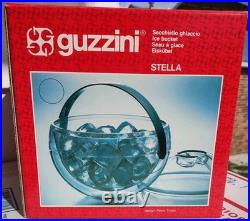

&####128308;All sales final. Look at pictures for condition and measurements. Purchasing means you acknowledge this. Other items listed and remember to follow, so you don’t miss out on new listings. More listed and are being listed. MCM RARE SNew Old Stock Retro Space Age Guzzini Stella Sphere Shaped Ice Bucket&####128308;&####128992;&####128993;&####128308;? &####128309. Compasso d’Oro Award Compasso d’Oro in 1991. Compasso d’Oro Award Compasso d’Oro in 2004. The story of Fratelli Guzzini began between 1911 and 1912, when Enrico Guzzini, returning from a trip to Argentina, began to produce ox horn items such as snuff boxes, combs, shoehorn and salad cutlery. Son of a sharecropper of the Leopardi family, in 1906 Enrico Guzzini had emigrated to Argentina to rejoin his brother Giuseppe, who left a few months earlier following the failure of his workshop for the manufacture of briar pipes. In Buenos Aires Guzzini also found his eldest son Ubaldo, entrusted by him to Giuseppe because he learned, in the workshop that he opened Overseas, the art of working the horn, raw material widely used in Recanati since the first half of the nineteenth century for the production of combs. Back in Recanati in May 1911, in 1912 Enrico decided to start a workshop for the manufacture of articles for smokers. He builds some of the working tools himself, others he receives from a friend, comb maker, who also supplies him with the first pieces of horn. [1] The calf and rabbits that Guzzini raises inside the small factory – sixty square meters removed from his home – testify to the resistant relationship that binds, in his as in many other cases in central Italy of the time, the peasant world to manufacturing activity. At this stage Guzzini does not have a distribution network, nor does he have the skills to set up one; he therefore entrusts the marketing of his products to a local company, that of the Capodaglio brothers, which deals mainly with the manufacture and sale of combs. Until the first post-war period, the workshop retained an artisanal organization and the products were in line with the more traditional horn articles for smokers produced in the region. The first elements of novelty are observed around the mid-twenties and coincide with the entry into the company of Pierino Guzzini. Second son, he had abandoned his youthful religious vocation and, at the end of the First World War, he had worked among other things at the factory of a cousin, a pipe maker, from whom he had borrowed the idea of using the horn to build not only snuff boxes, but also shoehorn and cutlery for salad. In 1929 the Guzzini hired their first sales agent, a Bolognese representative who, within a few weeks, received numerous orders from central and northern Italy. In the same period the entrepreneur definitively entrusted the company-now numbering about twenty employees-to his sons Pierino and Mariano, who moved the production site to a larger plant and changed the company name first to P. Guzzini, then (with the entry, in 1938, of his brother Silvio) to P. Guzzini, and finally, in 1940, to Fratelli Guzzini. The adoption of methacrylate called pleig The technique of compressed air molding is applied. The company starts working in series of objects of various types, such as ladles, cups, cups, cheese makers, salad bowls. From that period are the cup and plate decorated with the first subjects of the Dis. In 1953 the company acquired the technology for the production of cast sheets and from single color to two-color. It was in the early fifties that Giovanni and Raimondo Guzzini created the current Vintage series. In 1958 the company filed the international patent called Doppiato. During the fifties, a small injection molding machine was introduced to meet the needs of objects such as glasses and teaspoons, which are difficult to reproduce in slabs. The automated injection presses of the sixties allow the molding of thermoplastic granules, a technology that leads Guzzini to gradually abandon a semi-artisan culture for large-scale serial production. Rectangular snuffbox: Object with which the company’s activity begins. Container for snuff, made of special natural ox horn. Ox horn snuffbox useful for storing snuff produced in 1912. 1938 – First objects in pleig. Laid oval salad tortiglione: Salad spoon and fork, internally designed and made of the new plastic material, polymethyl methacrylate Pleig. Tortiglione cutlery produced in 1938. Flatware Tortiglione in pleig iglas produced in 1938. Salad container: Square-shaped container, internally designed, produced in two-tone opal methacrylate in various sizes and for various uses. Salad container in two-tone opal methacrylate. Salad container in two-tone opal methacrylate produced in the fifties. Seth hisky: Coordinated set designed by designer F. 60s-Methacrylate tube blowing technology. Riviera carafe with teak handle: Designed by Giovanni Guzzini, it is made by blowing compressed air from a polymethyl methacrylate tube Pleig. Square module: Service per part designed by designer Ornella Noorda, printed from polythyl methacrylate plate Pleig It consists of a rectangular tray in which a square tray is inserted, which in turn contains eight small containers, always square. Cart Massoni: Designed by the architect Luigi Massoni is characterized by a supporting structure composed of three identical elements, equipped with wheels, joined together by large buttons, on which are supported two round containers. Bed tray: Multi-purpose folding bed tray designed by Architect Luigi Massoni with retractable support legs. Mushroom table: Designed by designer Dick Hensek. It is a small reclosable ABS table. Pic Boll: Picnic service for six people, designed by designer Carlo Viglino. It consists of a shell consisting of two hemispheres-containers inside which are stored a serving of dishes for six people (tops, bottom plates and fruit plates), six glasses, an oil/vinegar maker, a salt shaker and a tray. Late 70s-Injection molding technology-blow molding. Olierona Metropolitan: The olierona is made by the architect Furio Minori with the technology of standard injection molding which provides, before the cooling phase, the blowing of the workpiece; the object, not yet solidified, is blown inside with compressed air until the desired shape is reached. Tobia thermal carafe with gas-assisted injection molded handle. Early 80s-Injection molding of two-tone plastic material. Salad Line: The two elements consist of a hollow ovalized portion, connected to a handle composed of a flat and transparent part in polymethyl methacrylate with rounded edges, on which intersects, centrally, a relief frieze, rounded longitudinal, made of SAN. 80s-Gas assisted injection molding. Thermal carafe Tobia: The carafe has, in the detail of the handle, the injection molding assisted by gas which consists in the introduction of an inert gas inside the molten mass previously injected into a mold. Design Studio Angeletti Ruzza. Chef Line: Designed by architect Bruno Gecchelin, it is a kitchen collection. Made of polypropylene (Moplen). Design by Robin Levien. Gildo-household appliances: The Gildo collection by the architect Dario Tanfoglio. 00s-Plastic material (ABS, SAN and PMMA). È un’azienda italiana produttrice di articoli di design per la tavola, la cucina e l’arredo in materiale plastico pregiato, fondata da Enrico Guzzini a Recanati nel 1912. Compasso d’Oro Premio Compasso d’oro nel 1991. Compasso d’Oro Premio Compasso d’oro nel 2004. La storia di Fratelli Guzzini inizia tra il 1911 e il 1912, quando Enrico Guzzini, al rientro da un viaggio in Argentina, inizia a produrre articoli in corno di bue come tabacchiere, pettini, calzascarpe e posate da insalata. Figlio di un mezzadro della famiglia Leopardi, nel 1906 Enrico Guzzini era emigrato in Argentina per ricongiungersi al fratello Giuseppe, partito pochi mesi prima in seguito al fallimento del suo laboratorio per la fabbricazione di pipe in radica. A Buenos Aires Guzzini ritrova anche il figlio primogenito Ubaldo, da lui stesso affidato a Giuseppe perché impari, nella bottega che questi apre Oltreoceano, l’arte della lavorazione del corno, materia prima largamente impiegata a Recanati sin dalla prima metà dell’Ottocento per la produzione dei pettini. Tornato a Recanati nel maggio 1911, nel 1912 Enrico decide di avviare un laboratorio per la fabbricazione di articoli per fumatori. Costruisce da sé alcuni degli attrezzi di lavoro, altri li riceve da un amico, produttore di pettini, che gli fornisce anche i primi pezzi di corno. Il vitello e i conigli che Guzzini alleva all’interno del piccolo opificio – sessanta metri quadrati sottratti alla propria abitazione – testimoniano il resistente rapporto che lega, nel suo come in molti altri casi nell’Italia centrale del tempo, il mondo contadino all’attività manifatturiera. Ugualmente esemplare è il ruolo rivestito dalla famiglia: nella bottega trovano infatti posto, via via, i tre figli maschi rimasti in Italia (Pierino, Mariano, Silvio), mentre sua moglie contribuisce al bilancio coltivando il terreno intorno alla casa, aprendo un piccolo negozio di alimentari al pianterreno e allevando i bachi da seta, poi venduti a una filanda vicina. In questa fase Guzzini non dispone di una rete distributiva, e tantomeno possiede le competenze per allestirne una; affida dunque la commercializzazione dei suoi prodotti a una ditta locale, quella dei fratelli Capodaglio, che si occupa principalmente della fabbricazione e dello smercio di pettini. Fino al primo dopoguerra il laboratorio conserva un’organizzazione artigianale e i prodotti si allineano ai più tradizionali articoli in corno per fumatori prodotti nella regione. I primi elementi di novità si osservano intorno alla metà degli anni venti e coincidono con l’ingresso in azienda di Pierino Guzzini. Secondogenito, aveva abbandonato la giovanile vocazione religiosa e, al termine del primo conflitto mondiale, aveva lavorato fra l’altro presso l’opificio di un cugino, fabbricante di pipe, da cui aveva mutuato l’idea di impiegare il corno per costruire non solo tabacchiere, ma anche calzascarpe e posate per insalata. Enrico Guzzini si lascia convincere dal figlio Pierino ad ampliare la gamma dei prodotti e a utilizzare 3.000 lire attinte ai risparmi di famiglia – in linea con la prassi dell’autofinanziamento che fra XIX e XX secolo presiede alle iniziative imprenditoriali della Terza Italia – nell’acquisto di nuove macchine. In breve tempo, mentre la giornata di lavoro si riduce da 12 a otto ore, il volume della produzione triplica. Nel 1929 i Guzzini assumono il loro primo agente di commercio, un rappresentante bolognese che nel volgere di poche settimane fa giungere numerosi ordini provenienti dall’Italia centro-settentrionale. Il brusco calo della domanda avvertito durante la grande depressione degli anni trenta sollecita la ditta recanatese a un’ulteriore diversificazione produttiva, cui si accompagna l’inedito impiego di un materiale economico ottenuto con i sottoprodotti del latte (la galalite), che permette di contenere i costi e dunque di moderare i prezzi di vendita delle posate. Nello stesso periodo l’imprenditore affida definitivamente la ditta – giunta a contare una ventina di addetti – ai figli Pierino e Mariano, che spostano la sede produttiva in uno stabilimento più ampio e ne modificano la ragione sociale prima in P. Guzzini, poi (con l’ingresso, nel 1938, del fratello Silvio) in P. Guzzini, e infine, nel 1940, in Fratelli Guzzini. L’adozione del metacrilato detto plexiglas, intrapresa già alla vigilia della seconda guerra mondiale nel 1938 e rinnovata nella fase postbellica, segna il definitivo decollo dell’impresa. [1] Viene applicata la tecnica dello stampaggio ad aria compressa. L’azienda dà inizio alla lavorazione in serie di oggetti di varie tipologie, come mestoli, tazze, tazzine, formaggiere, insalatiere. Di quel periodo sono la tazza e il piatto decorati con i primi soggetti della Walt Disney. Nel 1953 l’azienda acquisisce la tecnologia per la produzione delle lastre colate e dal monocolore si passa al bicolore. È proprio nei primi anni cinquanta che Giovanni e Raimondo Guzzini creano l’attuale serie Vintage. Nel 1958 l’azienda deposita il brevetto internazionale denominato Doppiato. Nel corso degli anni cinquanta viene introdotta una piccola pressa ad iniezione per rispondere al fabbisogno di oggetti come bicchieri e cucchiaini da bibita, difficilmente riproducibili in lastra. Le presse ad iniezione automatizzate degli anni sessanta consentono lo stampaggio dei granuli termoplastici, tecnologia che porta la Guzzini ad abbandonare gradualmente una cultura semiartigianale per la produzione seriale su vasta scala. 1912 – Oggetti in corno. Tabacchiera rettangolare: Oggetto con cui ha inizio l’attività dell’azienda. Contenitore per tabacco da fiuto, in corno naturale speciale di bue. Tabacchiera in corno di bue. Tabacchiera in corno di bue utile a conservare il tabacco da fiuto prodotta nel 1912. 1938 – Primi oggetti in plexiglas. Posata insalata ovale a tortiglione: Cucchiaio e forchetta da insalata, progettata internamente e realizzata nel nuovo materiale plastico, il polimetilmetacrilato (Plexiglas). Posate a Tortiglione prodotte nel 1938. Posate a Tortiglione in plexiglas prodotte nel 1938. Anni’50 – Brevetto lastra bicolore. Contenitore insalata: Contenitore di forma quadrata, progettato internamente, prodotto in metacrilato bicolore opalino in varie misure e per svariati usi. Contenitore insalata in metacrilato bicolore opalino. Contenitore insalata in metacrilato bicolore opalino prodotto negli anni cinquanta. Set Whisky: Set coordinato disegnato dal designer F. Charles Joosten, composto da dieci pezzi in polimetilmetacrilato (Plexiglas). Anni’60 – Tecnologia del soffiaggio del tubo di metacrilato. Caraffa Riviera con manico in teak: Progettata da Giovanni Guzzini è realizzata tramite il soffiaggio d’aria compressa di un tubo di polimetilmetacrilato (Plexiglas). Modulo quadrato: Servizio per party disegnato dalla designer Ornella Noorda, stampato da lastra in politilmetacrilato (Plexiglas) e serigrafato. Si compone di un vassoio rettangolare nel quale si inserisce un vassoio quadrato, il quale a sua volta contiene otto piccoli contenitori, sempre quadrati. Carrello Massoni: Disegnato dall’architetto Luigi Massoni è caratterizzato da una struttura portante composta da tre elementi identici, dotati di rotelle, uniti fra loro da grossi bottoni, sulla quale sono appoggiati due contenitori tondi. Anni’70 – Complemento d’arredo. Vassoio letto: Vassoio-letto pieghevole multiuso disegnato dall’Architetto Luigi Massoni dotato di gambe di sostegno a scomparsa. Tavolo Funghetto: Progettato dal designer Dick Henseky, è un piccolo tavolo in ABS richiudibile. Pic Boll: Servizio da pic-nic per sei persone, progettato dal designer Carlo Viglino. È costituito da un involucro composto da due semisfere-contenitori al cui interno sono riposti un servizio di piatti per sei persone (piani, piatti fondi e piatti frutta), sei bicchieri, un’oliera/acetiera, una saliera e un vassoio. Fine anni’70 – Tecnologia dello stampaggio ad inietto-soffiaggio. Olierona Metropolitan: L’olierona viene realizzata dall’architetto Furio Minuti con la tecnologia dello stampaggio a iniezione standard che prevede, prima della fase di raffreddamento, il soffiaggio del pezzo in lavorazione; l’oggetto, non ancora solidificato, viene soffiato al suo interno con aria compressa fino al raggiungimento della forma desiderata. Caraffa termica Tobia con manico stampato a iniezione assistita da gas. Primi anni’80 – Stampaggio ad iniezione di materiale plastico bicolore. Posata insalata Line: I due elementi sono costituiti da una porzione ovalizzata incavata, raccordata a un manico composto da una parte piatta e trasparente in polimetilmetacrilato con bordi arrotondati, sulla quale s’interseca, centralmente, un fregio a rilievo, longitudinale arrotondato, realizzato in SAN. Anni’80 – Stampaggio ad iniezione assistita da gas. Caraffa termica Tobia: La caraffa presenta, nel particolare del manico, lo stampaggio ad iniezione assistita da gas che consiste nell’introduzione di un gas inerte all’interno della massa fusa precedentemente iniettata in uno stampo. Chef Line: Progettata dall’architetto Bruno Gecchelin, è una collezione cucina. Realizzata in polipropilene (Moplen). Anni’90 – Multimaterialità. Gildo – elettrodomestici: La collezione Gildo dell’architetto Dario Tanfoglio. Anni’00 – Materiale plastico (ABS, SAN e PMMA). Dolly – Bilancia conica da cucina graduata con doppia scala di misura: design dell’architetto Ennio Pasini. 2014 – Innovazione tecnica e interpretazione di altri materiali. Design e innovazione tecnica per emulare effetti del vetro artistico. 2016 – Innovazione tecnologica 3 COLOR TECH. Primi oggetti nell’ambito dei prodotti di design in materiale plastico per la casa, con effetto tricolore. Premio Compasso d’Oro ADI 1991. Menzione d’onore Compasso d’Oro 2011 ADI con Bottiglia Laurisia. 7 Segnalazioni ADI Design Index. Design Plus 2002 con Bilancia da cucina Grammy (design Marc Sadler). Design Plus 2009 con Caraffa Happy Hour (design Guzzini Lab). Design Plus 2010 con Centrifuga insalata Lulù (design Dario Tanfoglio). Premio IF 2004 con Bilancia Grammy (design Marc Sadler). Premio IF 2006 con Caraffa Happy Hour (design Guzzini Lab). Premio IF 2009 con Centrifuga insalata Latina (design Dario Tanfoglio). Museum of Contemporary Art – MCA Chicago. Premio Beverage Innovation Awards 2009 con Stille di Acqua Lurisia Miglior bottiglia in vetro dell’anno (design Sottsass e Associati). Premio Compasso d’Oro ADI 2004 con Spremiagrumi Latina (design Lorenzo Gecchelin). 16 Segnalazioni Compasso d’Oro ADI. Premio Red Dot design award 2009 con Portabiancheria Ninfea (design Roberto Giacomucci) e Ceppo coltelli Latina (Angeletti Ruzza). Premio Red Dot design award 2014 con Spatola e Pinza My Kitchen (design Continuum). Premio Goodesign 2009 con Portabiancheria Ninfea (design Roberto Giacomucci). Premio Goodesign 2014 con utensilerie My Kitchen (design Continuum). V&A Victoria and Albert Museum – Londra. MoMa Museum of Modern Art – New York. L’Archivio-Galleria Guzzini[2], è stato istituito nel 1995 con lo scopo di salvaguardare il patrimonio culturale e la documentazione storica delle tre aziende (Fratelli Guzzini, 1912, iGuzzini illuminazione, 1958, e Teuco, 1972), e in generale delle imprese del territorio recanatese, dove il gruppo opera dal 1912. Comprende, essenzialmente, tre fondi principali: iGuzzini illuminazione spa di Recanati (estremi cronologici: 1959 – 2004)[3]; Luigi Massoni, architetto e designer che ha dato un importante contributo allo sviluppo del design nel territorio marchigiano (estremi cronologici: 1967 – 1996)[4]; Sirrah srl (estremi cronologici: 1968 – 2004)[5]. GUZZINI, Enrico, su SAN – Portale degli Archivi d’Impresa. URL consultato il 15 marzo 2018. IGuzzini illuminazione spa, su SIUSA. Sistema Informativo Unificato per le Soprintendenze Archivistiche. URL consultato il 15 giugno 2018. IGuzzini illuminazione spa di Recanati, su SIUSA. Massoni Luigi, su SIUSA. Sirrah srl, su SIUSA. La famiglia come valore imprenditoriale, Loreto, Fimag, 2009. Amatori, Per un dizionario biografico degli imprenditori marchigiani, in Storia d’Italia. Le Marche, a cura di S. Anselmi, Torino, Einaudi, 1987, pp. Guzzini, Un fascio di ricordi. Dal nulla qualcosa. , “memoriale” stilato il 10/6/1976, Recanati. A cura di Germano Celant. Triannale Design Museum 2015. A cura di C. Plastiche: i materiali del possibile. Polimeri e compositi fra design e architettura. Prefazione di Andrea Branzi – Alinea Editore 2014. Infinito design italiano – Moreno Gentili – Edizione Skira 2012. Design in cucina – oggetti, riti, luoghi – Valentina Auricchio – Giunti Editore 2012. Disegno e Design – Brevetti e Creatività Italiana – Fondazione Valore Italia 2010. Il trasferimento di conoscenze tecnologiche nelle imprese Design-oriented, alcuni casi aziendali – Facoltà di Ingegneria – Tesi di Laurea di Silvia Cantarello – Relatore Giorgio Petroni. Design Connection between Korea and Italy – Seoul Metropolitan Government, Embassy of Italy. Publisher Jae-jin Shim 2010. Il talento dell’impresa – L’impronta Rinascimentale in dieci aziende italiane. A cura di Giovanni Lanzone e Francesco Morace. Turismo industriale in Italia – Touring Club Italiano 2008. Multipli di cipo – Foodesign Guzzini Made in Japan. A new relationship between food experts and designers. By Aldo Colonetti 2008. Wonderful Water World – Quaranta Progetti Foodesign Guzzini e Sanpellegrino. I nuovi valori dell’acqua – a cura di Aldo Colonetti. Mo. Moplen, il design delle plastiche negli anni del boom – designpress 2006. Top Marche – Guide to the excellent business of Marche region – Editrice Mondo Lavoro 2006. Multipli di Cibo – Foodesign Guzzini Made in Germany. Eine neue Beziehung zwischen Foodexperten und Desinern – Hearausgegeben von Aldo Colonetti. La Qualità dell’Abitare – Almerico De Angelis – Editoriale Modo 2005. The International Design Yearbook 2004 – Laurence King Publishing. Topbrands 2004 – Superbrands Ltd. Multipli di Cibo – Cento Progetti Foodesign Guzzini. Un nuovo rapporto tra esperti del cibo e design – a cura di Aldo Colonetti. Storia della Pentola – Eugenio Medagliani Carlo G. Valli – Bibliotheca Culinaria 2004. The Marche, Guzzini and Design – Augusto Morello – Edizione Electa 2002. Italia e Giappone: Design come stile di vita – 10 paesaggi italiani. Editore Nihon Keizai Shimbun 2001. Storia del disegno industriale italiano – Anty Pansera – Editori Laterza 1993. Collabora a Wikimedia Commons Wikimedia Commons contiene immagini o altri file su Fratelli Guzzini. Sito ufficiale, su fratelliguzzini. Com. Azienda del settore dell’illuminazione. Designer e architetto italiano. Joosten, inspired by his famous 1957 drinks and beverages line. The new pitcher belongs to the Circle programme: it is made from bio-circular plastics, derived from plant biomass waste residues, 100% recyclable. The product’s bio-based content is calculated using the mass balance approach and is ISCC (International Sustainability & Carbon Certification) certified. “110” is a revolutionary new entry in the the tableware sector. Eco-Kitchen is the first collection of kitchen worktop organiser products made from 100% recyclable antibacterial post-consumer recycled plastic: a revolution in environmental sustainability and hygiene. Birth of the first collection of fridge containers and kitchen utensils made from 100% recyclable post-consumer recycled plastic: the Guzzini Re-Generation collection, which wins the 2021 Red Dot Design Award and the 2021 Green Product Award. Innovation is extended further with continual research into new recycled and recyclable plastics. The Circle programme is born, comprising eco-sustainable products with the best functional performances. The Tidy&Store modular boxes and the Tierra tableware products are the first Guzzini collections made by recycling post-consumer disposable water bottles (Re-Pet). First object in the world, in design plastic products fot the home, with three-color effect. Grace collection design innovation and extension for the interpretation of other materials. First collection in the world made of transparent two-coloured plastic materials by using injection moulding technology. First steel items in the world with two-coloured acrylic handles. First porcelain items in the world with two-coloured acrylic handles. Design and colour for an innovative interpretation of the world of small household appliances. First object in the world, in design plastic products fot the home, with two-color effect by using bi-injection moulding technology. Innovation in the kitchen with the introduction of a design and colour-coordinated collection. First complete design tableware systems with coordinated colours and decorations. In the early 60s the novelty was the injection molding of colored plastic materials for domestic use. In 1955 we are the first company to start introducing plastic design objects for domestic use. The coloured methacrylate and the two-tone technology. First company in the world to manufacture acrylic two-coloured items using thermoforming technology. In 1938, another Guzzini generation introduced Plexiglas into the manufacture of items for the home. Ever since then, our history has been one of milestones in innovation. It all began with Enrico Guzzini, who drew on his experience abroad to give fresh impulse to an ancient craft: the creation of exquisite objects in ox horn. Guzzini is often mistakenly thought to be the name of a lighting designer active in the 1960s and 1970s. But in fact the label belongs to a lighting manufacturing company that was founded by six Guzzini brothers – Raimondo, Giovanni, Virgilio, Giuseppe, Adolfo and Giannunzio, who were inspired by the 1950 film Harvey starring James Stewart. Compounding the historical record even further, it seems that the Guzzini company rebranded many times in the 20th century, going by, at various points, Harvey Creazioni, Harvey Guzzini, Guzzini, iGuzzini and Illuminazione Guzzini. Harvey Creazioni was originally founded in 1959 in Recanati (on the east-central coast of Italy) by Raimondo, focusing on the production of copper-plated decorative objects. Four years later, in June 1963, the six brothers joined together and established Harvey Creazioni di Guzzini, expanding production to include pendant lighting, sconces, table lamps and floor lamps. The brothers employed architect-designer Luigi Massoni – who was introduced to the Guzzini brothers by leading plastic importer Maurizio Adreani – as head of design, branding, public relations and advertising. Famous Harvey Guzzini designs include Massoni and Luciano Buttura’s Mushroom table lamp (1965) as well as the in-house designed Arc floor lamp (1968), Faro table lamp (1970) and Toledo table lamp (1973). Studio 6G, an interning design team, developed the collectible Clan table lamp (1968); and designers Ermanno Lampa and Sergio Brazzoli were responsible for the Nastro series (1970), Orione pendant (1970), Sirio table lamp (1970), Alba floor lamp (1973), Albanella table lamp (1973) and Alf series (1976). Around 1976, Harvey Guzzini ceased the production of copper-plated items to concentrate on lighting made almost exclusively from methacrylate plastic (acrylic). The company also dabbled in furniture production, collaborating with Yugoslavian furniture producer Meblo, located in Nova Gorica in present-day Slovenia. In 1967-68, the company exhibited at Domus: Formes Italiennes in the Galeries Lafayette in Paris under the name Design House (DH), where the company featured Gio Ponti’s Media lamp. A retail outlet was opened in central Milan under the name Harvey Guzzini-DH in 1969, situated literally and figuratively among the best known Italian design houses. In 1974, the company rebranded once more as iGuzzini, adding Illuminazione in 1981, which still exists today with headquarters in Recanati, Italy. Vintage Stella Guzzini Sphere, Orb Ice Bucket, Space age collection 1970’s. The Vintage Stella Guzzini Orb Sfera Round Ball Ice Bucket with Tongs is a retro collectible piece perfect for any barware collection. Made in Italy by the renowned brand Guzzini, this clear sphere-shaped ice bucket features a yellow/grey horizontal stripe pattern, adding a unique touch to any occasion. With a diameter of 7 inches and a height of 7 inches, this hand wash only ice pail is both stylish and functional, making it a must-have for any Mid Century enthusiast. Guzzini Mid-Century Modern Ice Bucket “Stella” by Paolo Tilche Lucite HTF. Guzzini Stella Italy Ice Pail, Nautical Theme, New, Original Box, Never Used. Magnin and designed by Paolo Tilche in Italy for Guzzini. This ice bucket is in the shape of a white plastic ball from the middle of the last century. The design of the piece is actually pretty cool. When open, the top half of the piece can be removed. When closed the top has a concave shape that can be used to hold the handle and care for the bucket of ice. While there were many Guzzini “orb” ice buckets designed, this “nautical” theme is one that I haven’t been able to find elsewhere. The navy and white “stripe” of nautical rope around the circumference along with a navy, white and yellow anchor bringing the two ends together to make this crazy piece of art the focal point of your bar. Dimensions: 7.9 Width, Depth, Height. An iconic piece that is really beautiful.