
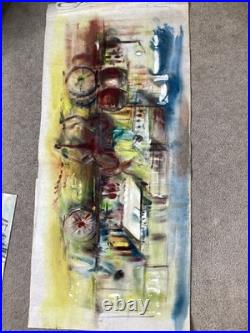
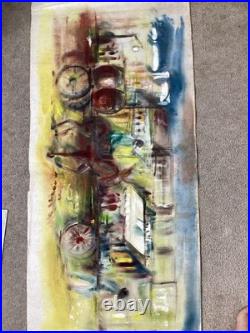





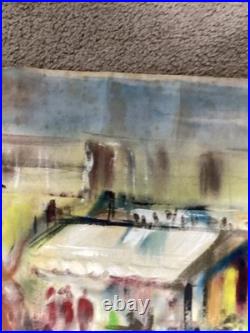


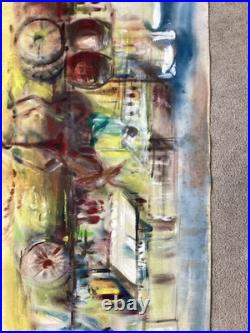



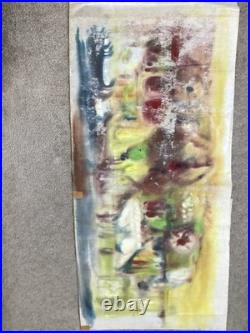

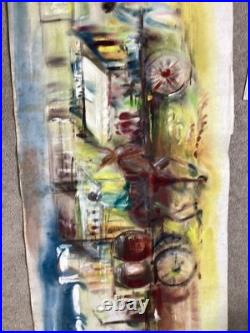
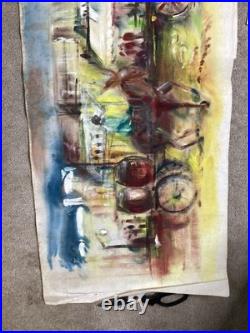
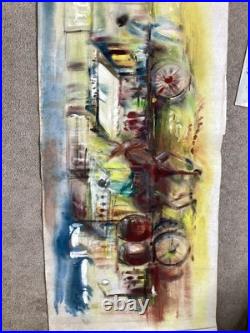
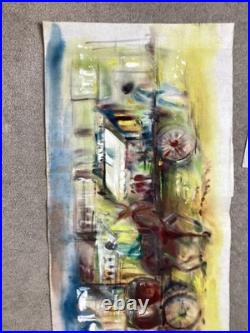
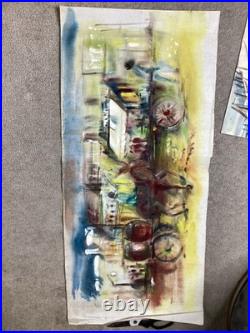

Detailed Description & Subject Matter. This striking piece is a masterclass in Mid-Century Modern industrial abstraction. The composition utilizes a sophisticated panoramic format to tell a story of movement and machinery. The Subject: The painting features a series of layered, “ghosted” circular forms that evoke heavy industrial gears, locomotive wheels, or the intricate clockwork of a master jeweler-a direct nod to Ball’s background in metalsmithing. Color & Composition: Vibrant washes of ochre yellow and deep crimson are anchored by a heavy, atmospheric vertical blue wash on the right, suggesting a rain-swept urban dock or a bustling train station. Technique: Painted on “cloth-paper” (a heavy, textile-based cotton rag), the surface bears the beautiful, wavy texture (“cockling”) of a true wet-media original. The gestural black ink work provides a sharp, architectural skeleton to the fluid color fields. This is an exceptionally rare find. While Mildred Ball is a celebrated name in North Carolina’s history, the vast majority of her extant work is in the form of silver jewelry and enamelware. Large-scale 2D paintings on paper from her personal studio practice almost never hit the open market. For a collector of NC Regionalism or American Craft, this represents a rare opportunity to own a piece of her “flat art” that informed her world-famous jewelry designs. Artist Biography: Mildred L. Mildred Ball was a powerhouse of the Southern arts movement and a foundational figure in the Winston-Salem, NC art community. Pioneer of Craft: She was a founding member of the Sawtooth School for Visual Art and Piedmont. Condition Note: This vintage piece shows authentic “foxing” (natural age spots on the paper), confirming its mid-20th-century origin. Could use a professional cleaning before framing. 8 Craftsmen, organizations that still define the region’s artistic landscape today. The “Jeweler’s Eye”:After studying at the Cleveland Institute of Art, she became a master metalsmith. Her jewelry is characterized by the same modernist, geometric principles seen in this painting. Educator: Her influence was massive, serving as a long-time instructor at Salem College, where she taught fine arts and textiles. Legacy: Her work is held in prestigious collections and museums, recognized for its “prismatic nuances” and the seamless blend of industrial themes with organic, intuitive expression.